
Test-Optional to Test-Preferred: The New Reality of College Admissions
In the wake of COVID-19, test-optional admissions swept across the country. Over 1,700 U.S. colleges suspended standardized testing requirements, aiming for equity and flexibility during an uncertain time. Students responded by flooding admissions offices with applications — some due to heightened pandemic anxiety, but mostly because they could apply without fear of low scores hurting their admission chances.
But five years later, the data tell a more complicated story.
While only 5% of Common App colleges currently require test scores, many of the nation’s most selective universities are now reintroducing or emphasizing them.
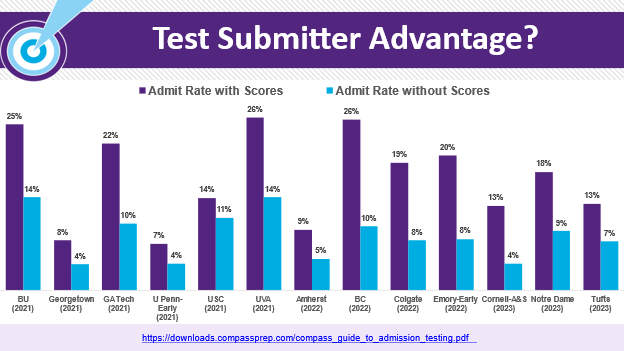
According to Compass Education Group’s Guide to Admission Testing, applicants who submit SAT or ACT scores enjoy a significantly higher admit rate than those who do not. The reason? Test-optional does not mean test-blind — and selective colleges use scores as one more way to confirm academic readiness in an increasingly competitive pool.
Colleges Returning to Testing Requirements
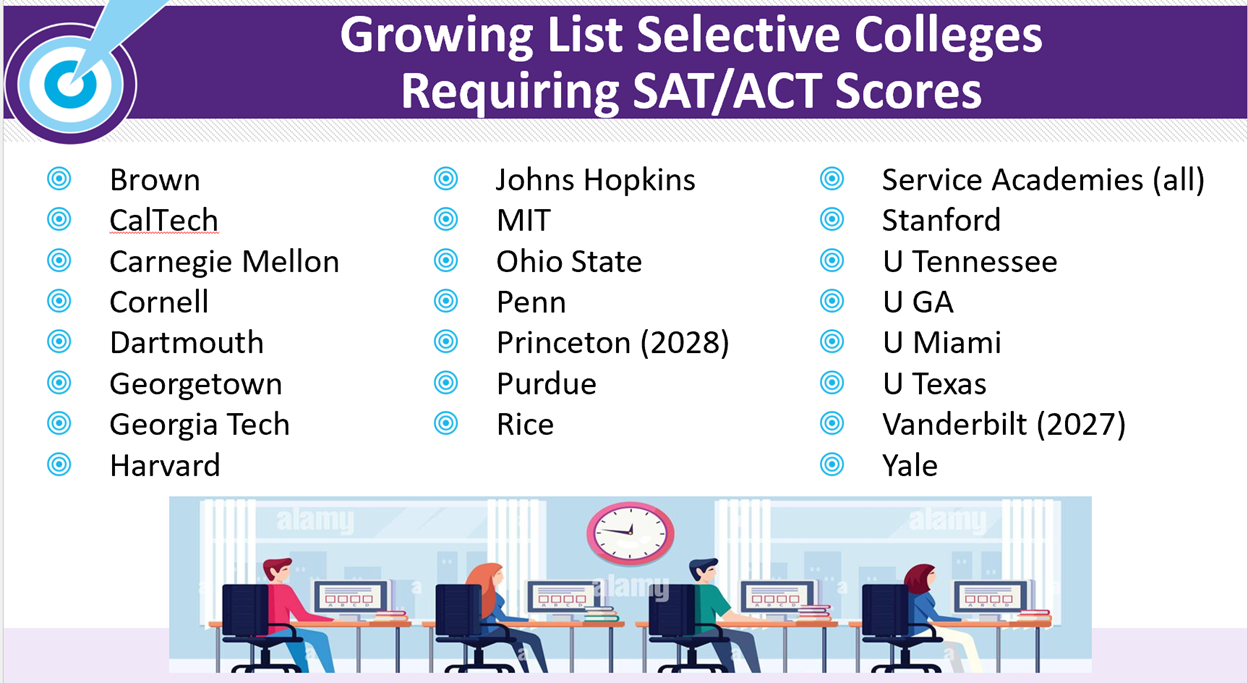
The list of schools reinstating required testing is growing — and fast.
According to Harvard University and public statements from peer institutions, several elite universities reinstated mandatory testing for the Class of 2029:
Ivy League & Highly Selective Institutions
Other Top Universities
Even more striking, Caltech became the first U.S. college to require an AP or IB exam score as part of its academic assessment — a sign of where elite admissions may be heading.
Why the Shift? Data — and Demand
Colleges that returned to test requirements have cited three main factors:
1. Data Integrity
Institutions like MIT, Georgia Tech, and Yale found that without test scores, admissions models became less predictive of student success — particularly in STEM fields where SAT/ACT math performance correlates strongly with GPA and retention.
At the All-In Podcast, Dartmouth President Sian Beilock said, “We were the first Ivy League to bring the SAT back at Dartmouth, and many of our peers followed. And the reason is we looked at the data, and what we found was that it was a great equalizer in finding students from lower income backgrounds and higher income backgrounds who are succeeding in something that’s less actually susceptible to financial input, like letters of rec and what you did for the summer.”
2. Application Volume Control
Test-optional policies triggered an 83% surge in total applications since 2020, according to the Common App. Without standardized test scores, admissions teams faced heavier workloads and greater difficulty identifying high-potential candidates in large pools.

3. Fairness and Transparency
Many families misunderstood test-optional policies, sometimes withholding strong scores that were only slightly below a college’s mid-50% range. In practice, this often made their applications appear weaker, not stronger.
Several universities that have reinstated testing describe the change as a move toward greater fairness and clarity.
Brown University’s admissions dean explained in early 2024 that test scores “add an important piece of context” that helps evaluate applicants from vastly different schools.
Yale University similarly noted that its new test-flexible policy aims to ensure “students can showcase academic strengths on equal footing, using a common measure.”
MIT reinstated the SAT/ACT even earlier, emphasizing that scores help identify talented students “from all backgrounds, including those with fewer advantages.”
Together, these statements reflect a shared theme: colleges are not reversing equity efforts, but refining them — restoring a measurable standard that supports more consistent and transparent evaluation.
What the Numbers Really Show
Despite the rhetoric, test-optional policies have not erased the value of strong test scores — particularly at selective institutions. According to Compass Prep’s national analysis:
Most test-optional colleges still admit a majority of students who submit scores.
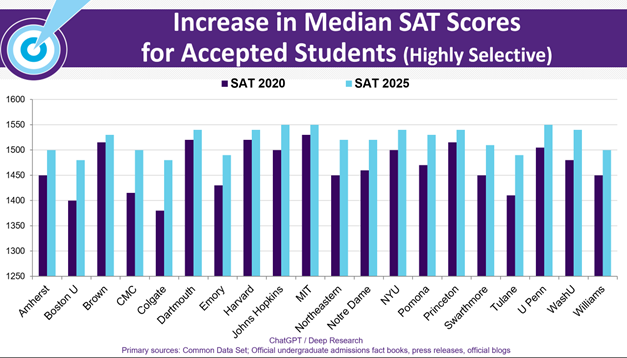
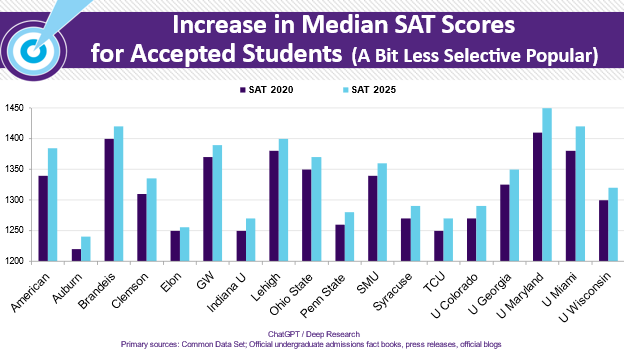
Median SAT and ACT scores for accepted students have risen due to self-selection.
Score submitters often have higher GPAs and stronger course rigor.
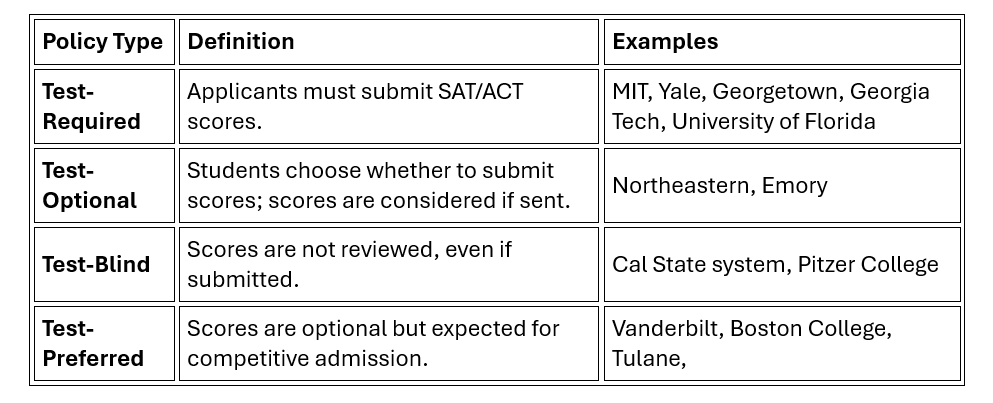
Test-Optional vs. Test-Blind vs. Test-Preferred
How Families Should Adjust Their Strategy
Given this shift, families should adapt their approach:
Plan for at least one official test. Take the SAT in spring of junior year, after receiving PSAT scores. Take the ACT earlier in junior year when My Answer Key is available. Such a schedule allows for a potential retake before senior fall. The ACT’s test removal option is another reason to take it early. The College Board only allows score cancellation within one week of testing.
Use data-driven practice. Aim for a score within or above your target college’s middle 50% range, which can be found in Common Data Set reports.
Submit your score if it strengthens your profile. A solid test score can validate academic readiness.
Leverage test flexibility. Many colleges allow self-reported scores and superscoring.
Highlight academic rigor. Strong AP and IB results remain critical indicators of readiness. Yale even accepts AP/IB scores in place of SAT/ACT under its test-flexible policy.
The Bottom Line
The test-optional movement gave students short-term relief during the pandemic — but long-term, it has made the admissions process more competitive, not less.
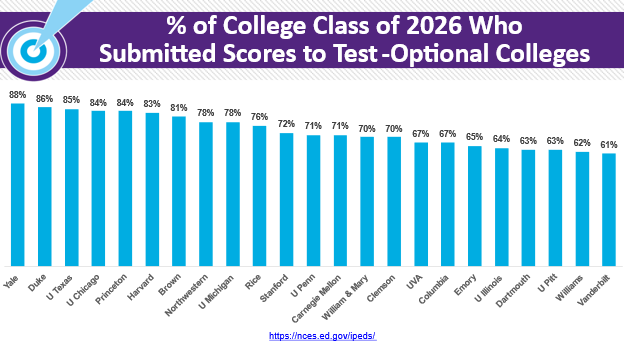
For the Class of 2026 and beyond, the pendulum has swung back toward testing as a central part of academic evaluation. Colleges continue to value holistic review, but the evidence is clear: strong test scores remain one of the few quantifiable ways to stand out in a record-breaking applicant pool.
Students should approach the process with a test-preferred mindset and build a strategy that keeps testing — and flexibility — in the mix.
